The idea of ditching keys entirely sounds appealing until you actually think through what happens when the battery dies or the app glitches at the worst possible moment. I’ve genuinely gone back and forth on this debate myself while helping a family member decide on their apartment upgrade.
The smart door locks vs traditional locks question isn’t as simple as “newer is better” — each comes with real trade-offs worth understanding before you invest.
Which Type of Lock Is Actually More Secure?
Quick answer: Well-built traditional deadbolts and quality smart locks both offer strong physical security against forced entry; the real difference lies in smart locks’ vulnerability to digital hacking versus traditional locks’ vulnerability to lock-picking and lost key issues.
1. Physical Security Comparison
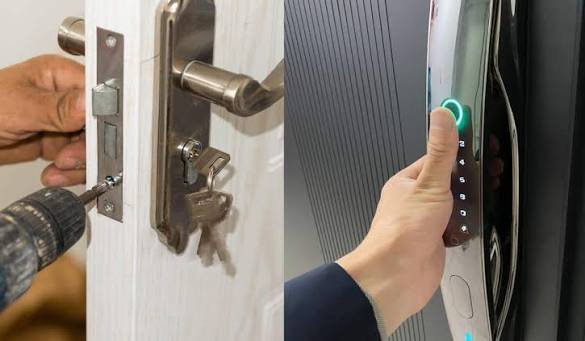
A quality traditional deadbolt with a solid strike plate provides excellent resistance to forced entry. Good smart locks, when properly installed, offer comparable physical security since many use the same underlying deadbolt mechanism with added digital control.
2. Convenience Factor
Smart locks genuinely win here. No more digging for keys with grocery bags, no worrying about giving out physical keys to house help or family members — temporary access codes solve that cleanly.
3. What Happens When Technology Fails?
Quick answer: Most quality smart locks include a physical key backup and battery-low warnings well before complete failure, but homeowners should always keep a backup physical key accessible in case of technical malfunction, power outage, or connectivity issues.
This is genuinely the biggest hesitation people have, and it’s a fair one. Always verify a smart lock has physical backup access before purchasing.
4. Digital Security Concerns
Smart locks connected to home WiFi networks carry theoretical hacking risk, though quality brands with proper encryption make this genuinely difficult in practice. Cheaper, unbranded smart locks are more vulnerable — this is one area where spending a bit more matters.
5. Cost Comparison
- Traditional deadbolt: ₹1,000-₹3,000 for a quality lock
- Basic smart lock: ₹6,000-₹12,000
- Premium smart lock with app integration and multiple access methods: ₹15,000-₹25,000
6. Access Management Advantages
For families or shared living situations, smart locks allow you to grant and revoke access remotely without physically exchanging keys — genuinely useful for managing house help schedules or temporary guest access.
7. Installation and Maintenance Considerations
- Traditional locks: simple installation, minimal ongoing maintenance
- Smart locks: require occasional battery replacement, firmware updates, and initial app setup
- Both types benefit from periodic mechanism lubrication for smooth operation
8. Which Should You Actually Choose?
Quick answer: Choose smart locks if convenience and remote access management matter to your household and you’re comfortable with occasional maintenance like battery changes; choose traditional locks if you prefer simplicity and zero dependency on technology or connectivity.
FAQs
Q: Can smart door locks be hacked easily? Quality smart locks with proper encryption are difficult to hack digitally, though cheaper unbranded options carry higher risk — brand reputation matters here.
Q: What happens if my smart lock’s battery dies while I’m out? Most quality smart locks provide low-battery warnings well in advance and include physical key backup access for this exact scenario.
Q: Are traditional locks more reliable than smart locks? In terms of simplicity and zero technology dependency, yes — but quality smart locks with backup options offer comparable practical reliability.
Q: Is it worth upgrading to a smart lock for a rented apartment? Depends on your lease terms — many smart locks fit over existing deadbolts without permanent modification, making them viable for renters.
Q: Do smart locks work during a power outage? Battery-powered smart locks continue working during home power outages, though it’s still wise to have a physical key backup for the battery itself failing.
Conclusion
The smart door locks vs traditional locks decision genuinely comes down to your household’s comfort with technology versus preference for mechanical simplicity. Both offer strong security when quality products are chosen — smart locks add convenience at the cost of occasional maintenance, while traditional locks trade convenience for dependable simplicity. [link to related guide on how to choose a security camera here]
Alt text suggestions:
- “Smart door lock with keypad installed on modern front door”
- “Traditional deadbolt lock with physical key on wooden door”
- “Homeowner managing smart lock access codes through phone app”